“Literally nothing was happening;everything stood on a standstill “- Sam Rholex *
*Sam Rholex is an urban and transport planner and cofounder of City Grid Transport Consultants.
“Kwa kweli hakuna kilichokuwa kikifanyika; kila kitu kilisimama – Sam Rholex *
*Sam Rholex ni mpangaji miji and mwanzilishi wa CityGrid Transport Consultants.
For this story, I decided to step away from Nairobi and focus on other urbanizing areas that also face emergencies. That journey took me to Kisumu County, specifically Ahero town. Ahero is an agricultural hub, known for producing rice through its irrigation scheme, along with sugarcane and soya.
Kwa hadithi hii, niliamua kuondoka Nairobi na kuangazia maeneo mengine ya mijini ambayo pia yanakabiliwa na maafa. Safari hiyo ilinipeleka hadi Kaunti ya Kisumu, haswa mji wa Ahero. Ahero ni kitovu cha kilimo, kinachojulikana kwa kuzalisha mpunga kupitia skimu yake ya umwagiliaji, pamoja na miwa na soya.
Sam, my interviewee, is from Ahero, in a place called Kabonyo. The Ahero urban center is equally a place of trade, driven by informal sector activities such as hawking, open-air fish frying, and boda boda (motorbike) services. all of which provide a source of income to a significant proportion of the population, much like Sam.
Sam, mhojiwa wangu, anatoka Ahero, mahali paitwapo Kabonyo. Kituo cha mijini cha Ahero vile vile ni mahali pa biashara, kinachoendeshwa na shughuli za sekta isiyo rasmi kama vile ufugaji wa samaki, kukaanga samaki, na huduma za boda boda, yote haya yanatoa chanzo cha mapato kwa idadi kubwa ya watu, kama vile Sam.
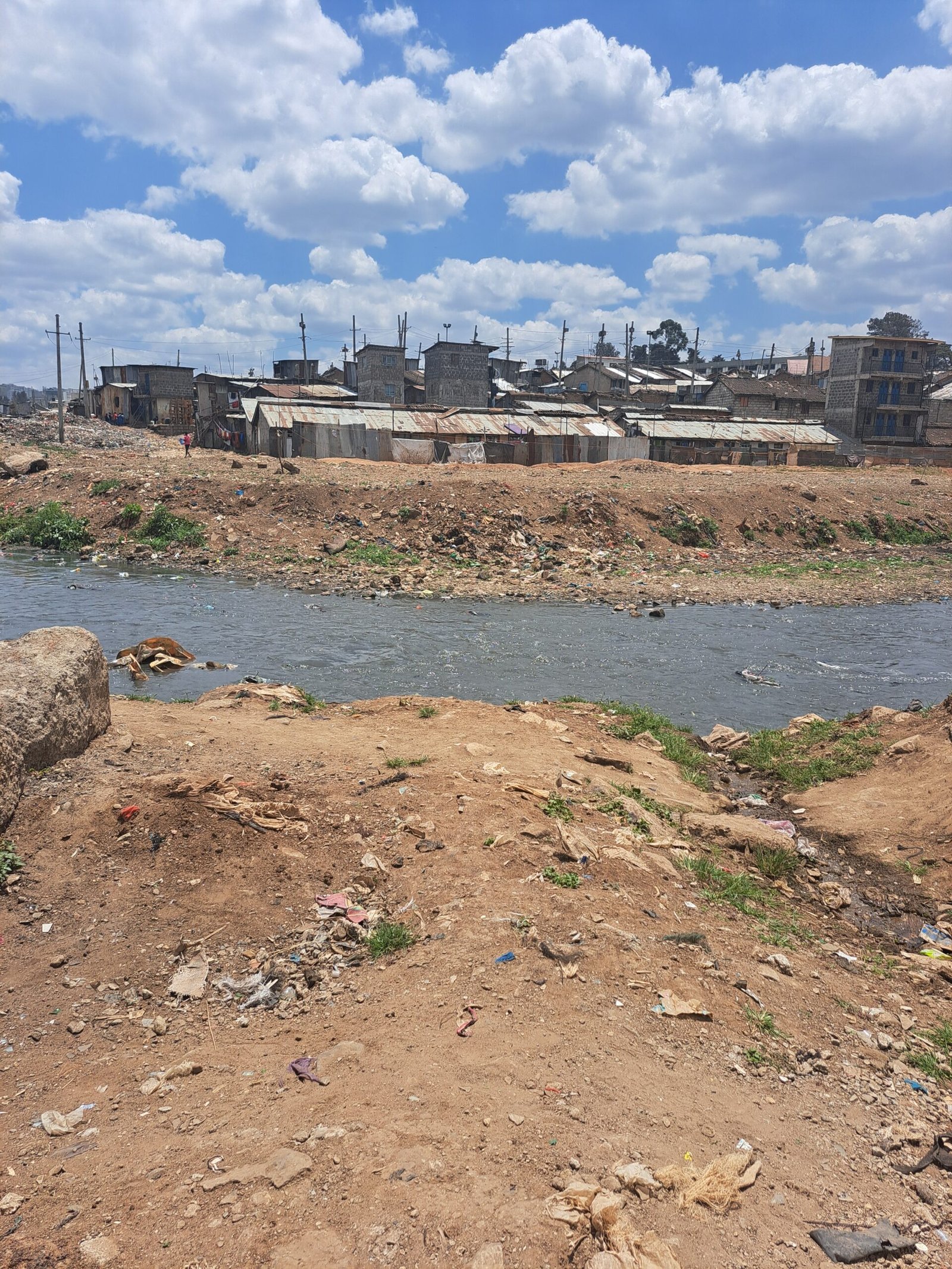
Sam runs a small poultry business, rearing chickens that he usually sells at the Ahero urban center. Nearby, at the edge of the town, flows the Nyando River — a river that, when swollen, often causes flooding in Ahero. Government efforts to control this have included the construction of gabions, but these measures only came after the catastrophic flooding during the rainy season of 2022. However, in 2023 and 2024, the same thing happened, even after all its efforts.
Sam anaendesha biashara ndogo ya kuku, akifuga kuku ambao huwa anawauza katika kituo cha mjini cha Ahero. Karibu, kwenye ukingo wa mji, kunatiririka Mto Nyando — mto ambao, unapovimba, mara nyingi husababisha mafuriko huko Ahero. Juhudi za serikali kudhibiti hili zimejumuisha ujenzi wa matuta, lakini hatua hizi zilikuja tu baada ya mafuriko makubwa wakati wa msimu wa mvua wa 2022. Walakini, mnamo 2023 na 2024, jambo kama hilo lilifanyika, hata baada ya juhudi hizo zote.
The downpour of 2022 was unlike anything the town had seen in years. As Sam put it, “the residents of Ahero do not fear water — in fact, they really love it because of the rice irrigation farms they depend on.” But this time, the rains brought fear instead.
Mvua ya 2022 ilikuwa tofauti na kitu chochote ambacho mji ulikuwa umeona kwa miaka. Kama Sam alivyosema, “wakazi wa Ahero hawaogopi maji — kwa kweli, wanaipenda sana kwa sababu ya mashamba ya umwagiliaji wa mpunga wanayotegemea.” Lakini wakati huu, mvua ilileta hofu.
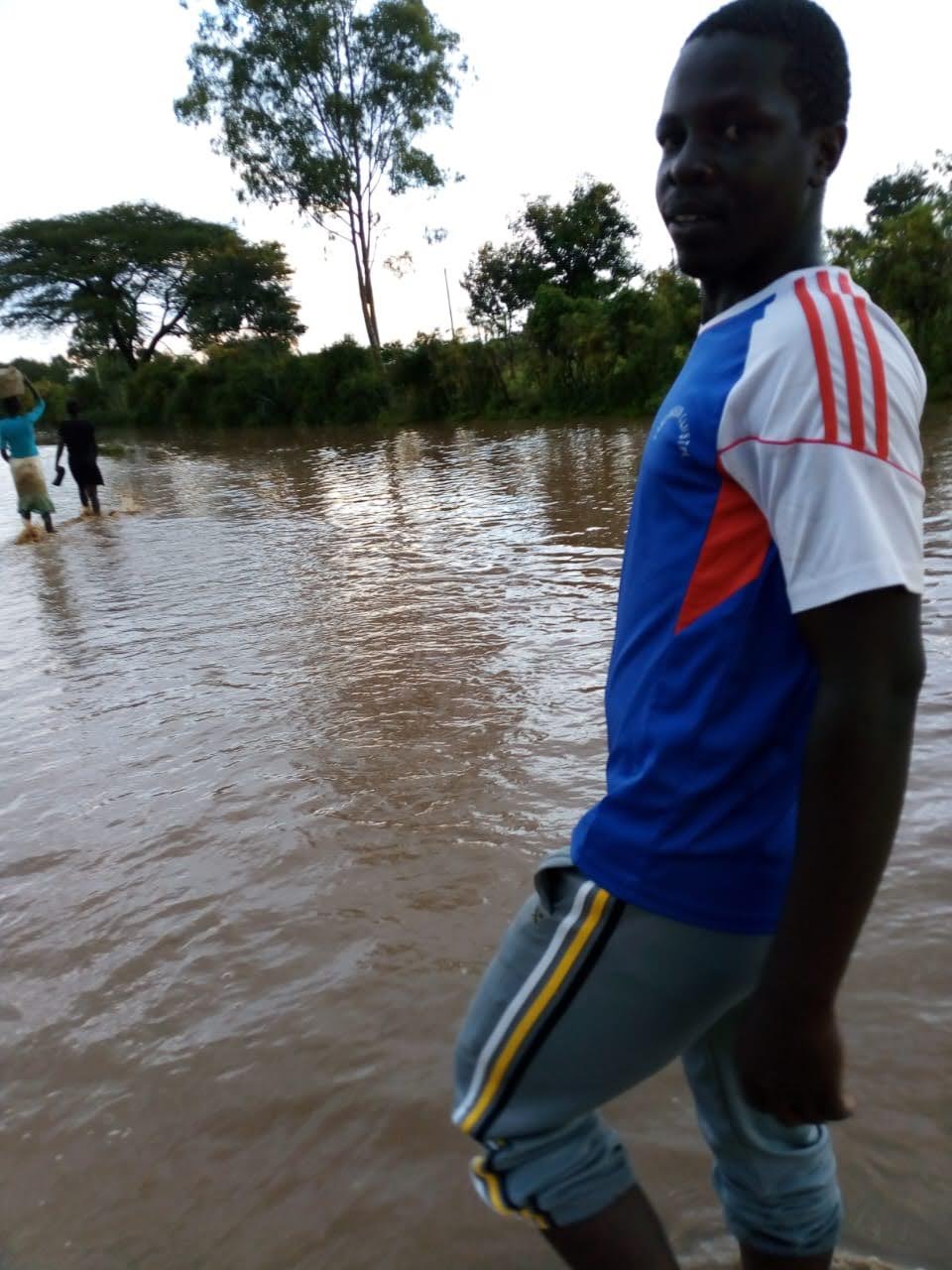
On one of those rainy mornings, Sam woke up to follow his usual routine of selling chickens at the town market. By then, the heavy overnight rain had already made the roads nearly impassable. Still, he pushed through and managed to get to Ahero town — only to find it heavily flooded. The Nyando River had burst its banks. Informal shops built of mabati (iron sheets) and matope (clay), clustered along the roadside, were completely submerged in water.
Katika moja ya asubuhi hizo za mvua, Sam aliamka na kufuata utaratibu wake wa kawaida wa kuuza kuku kwenye soko la jiji. Kufikia wakati huo, mvua kubwa ya usiku ilikuwa tayari imefanya barabara zisipitike. Bado, alisukuma na kufanikiwa kufika katika mji wa Ahero — na kukuta umejaa mafuriko. Mto Nyando ulikuwa umepasua kingo zake. Maduka yasiyo rasmi yaliyojengwa kwa mabati na udongo, yaliyounganishwa kando ya barabara, yalizama kabisa ndani ya maji.
The most challenging part for Sam was seeing the shops — built by hardworking locals who had poured everything into them — completely submerged under water. In the middle of the disaster, he carried the chickens he had planned to sell, still focused on making his way around town. His goal was to reach a hotel called Neville, where he hoped he could at least sell his merchandise. But when he got there, he found it submerged too, just like the rest.
Sehemu yenye changamoto kubwa kwa Sam ilikuwa kuona maduka — yaliyojengwa na wenyeji wachapakazi ambao walikuwa wamemimina kila kitu ndani yake — yakiwa yamezama kabisa chini ya maji. Katikati ya maafa hayo, aliwabeba kuku aliopanga kuwauza, wakiwa bado wamejikita katika kuzunguka mji. Kusudi lake lilikuwa kufikia hoteli iitwayo Neville, ambapo alitumaini kwamba angeweza angalau kuuza bidhaa zake. Lakini alipofika huko, alikuta imezama pia, kama majengo mengine.
With no business possible, Sam had no choice but to join others in helping the community salvage what little was left — property, belongings, and in some cases, people trapped by the waters. Nothing was moving, no trade was happening. Everything stood at a standstill as people struggled to save both lives and possessions.
Bila biashara yoyote, Sam hakuwa na chaguo ila kuungana na wengine katika kusaidia jamii kuokoa kile kidogo kilichosalia — mali, na katika visa vingine, watu walionaswa na maji. Hakuna kitu kilikuwa kikisonga, hakuna biashara iliyokuwa ikifanyika. Kila kitu kilisimama huku watu wakihangaika kuokoa maisha na mali.a
The worst impact was on the most vulnerable — the elderly and children. Schools were cut off, roads were impassable, and children could no longer attend classes. Literally nothing was moving; everything stood at a standstill.
Athari mbaya zaidi ilikuwa kwa wazee na watoto. Masomo yalisitishwa shuleni, barabara hazipitiki, na watoto hawakuweza tena kuhudhuria madarasa. Kwa kweli hakuna kitu kilikuwa kinasonga; kila kitu kilisimama.
The rainy period dragged on, and Sam eventually decided to stay home for a week. Yet even then, the rains didn’t stop, and people continued to be displaced.
Kipindi cha mvua kiliendelea, na hatimaye Sam aliamua kukaa nyumbani kwa wiki moja. Hata hivyo hata wakati huo, mvua haikukoma, na watu waliendelea kuhamishwa kutoka makazi yao.

Community members who were fishermen at Lake Victoria brought out their boats to ferry people from one place to another. Those who couldn’t get onto the boats were carried on people’s backs. In that moment, the community truly came through for each other, looking for every possible way to help.
Wanajamii waliokuwa wavuvi katika Ziwa Victoria walitoa boti zao ili kuwavusha watu kutoka sehemu moja hadi nyingine. Wale ambao hawakuweza kuingia kwenye boti walibebwa kwenye migongo ya watu. Wakati huo, jamii kweli ilisaidiana.
In the days after the floods, neighbors joined hands to build temporary houses out of iron sheets. Many of the sheets were contributed by community members, often taken from cowsheds that were then left standing with only sticks to hold them up. Others purchased iron sheets, while the local Member of County Assembly (MCA) mobilized people to support the construction of these makeshift shelters.
Siku chache baada ya mafuriko, majirani waliungana kujenga nyumba za muda kutoka kwa mabati. Mabati yalichangiwa na wanajamii, mara nyingi yalichukuliwa kutoka kwa mabanda ya ng’ombe ambayo yaliachwa yakiwa yamesimama na vijiti tu vya kuzishikilia. Wengine walinunua mabati, huku Mjumbe wa Bunge la Kaunti (MCA) akiwahamasisha watu kusaidia ujenzi wa makazi haya ya muda.
Even before the rains had completely subsided, it was as though the residents had already bounced back. People returned to their businesses, trying to make a shilling or two — after all, there were stomachs to feed. Children were taken to schools that hadn’t been submerged so they could continue learning. In the evenings, families went back to their temporary shelters, waiting for the rains to finally end before assessing the damage to their actual homes.
Hata kabla ya mvua kuisha kabisa, ilikuwa kana kwamba wakazi walikuwa tayari washastahimili. Watu walirudi kwenye biashara zao, wakijaribu kutengeneza shilingi au mbili baada ya yote, kulikuwa na matumbo ya kulisha. Watoto walipelekwa katika shule ambazo hazikuwa zimezama ili waendelee kufunzwa. Jioni, familia zilirudi kwenye makazi yao ya muda, zikingojea mvua kuisha kabla ya kutathmini uharibifu wa nyumba zao halisi.
For Sam, what stood out most was how people have begun to normalize these disasters. They know when the rainy season will come, and in a way, they brace themselves — not for survival, but for the losses they will inevitably face. It’s a kind of preparation, but not the good kind. During the floods, they move to safer ground, and as soon as the waters recede, they return — starting over, again and again
Kwa Sam, kilichojitokeza zaidi ni jinsi watu wameanza kuzoea majanga haya. Wanajua ni lini msimu wa mvua utakuja, na kwa njia fulani, wanajitayarisha, sio kwa ajili ya kuishi, lakini kwa hasara ambayo bila shaka watakabiliana nayo. Ni aina ya maandalizi, lakini sio aina nzuri. Wakati wa mafuriko, wanahamia kwenye ardhi salama, na mara tu maji yanapopungua, wanarudi — kuanzia, tena na tena
One reason this cycle persists is that people are deeply attached to their ancestral land, making it very difficult to move away completely. As a result, many end up getting sick from waterborne diseases and malaria. The saddest part of it all is that there aren’t enough medical practitioners to treat everyone who falls ill.
Sababu moja ya mzunguko huu kuendelea ni kwamba watu wameshikamana sana na ardhi ya mababu zao, na hivyo kufanya iwe vigumu sana kuondoka kabisa. Matokeo yake, wengi huishia kuugua magonjwa yatokanayo na maji na malaria. Jambo la kusikitisha zaidi ni kwamba hakuna madaktari wa kutosha kutibu kila mtu anayeugua.
Non-governmental organizations, like the Kenya Red Cross, once again came through for the people. They provided malaria nets, food, and other basic necessities. The government also intervened, but for Sam, its response came far too late — despite the fact that weather forecasts had already warned of the floods.
Mashirika yasiyo ya kiserikali, kama vile Shirika la Msalaba Mwekundu la Kenya, kwa mara nyingine tena yalikuja kwa ajili ya watu. Walitoa neti za malaria, chakula, na mahitaji mengine ya kimsingi. Serikali pia iliingilia kati, lakini kwa Sam, ilikuja kuchelewa sana — licha ya ukweli kwamba utabiri wa hali ya hewa ulikuwa tayari umeonya juu ya mafuriko.
In the end, people helped themselves far more than the government ever did. Every year, funds are supposedly allocated for disaster response, yet when disasters actually strike, there is suddenly no money available — even though these emergencies happen year in, year out. And when the situation worsens, the government turns to international organizations for aid.
Mwishowe, watu walijisaidia zaidi kuliko serikali ilivyowahi kufanya. Kila mwaka, fedha zinadaiwa kutengwa kwa ajili ya kukabiliana na maafa, lakini majanga yanapotokea, ghafla hakuna pesa zinazopatikana — ingawa dharura hizi hutokea mwaka baada ya mwaka. Na hali inapozidi kuwa mbaya, serikali inageukia mashirika ya kimataifa kwa ajili ya misaada.
As a planner himself, Sam reflected on how many planners dismiss disasters simply because they are not directly affected by them. Too often, he said, there is no sense of urgency — and so disaster planning is ignored altogether. Yet he strongly advocates for the role of community groups, which step up to support one another when emergencies strike. For Sam, there is still hope — hope for changing how we plan, prepare, and ultimately manage our emergencies.
Kama mpangaji miji, Sam alitafakari ni wapangaji wangapi wanaoondoa majanga kwa sababu tu hawajaathiriwa moja kwa moja nao. Mara nyingi, alisema, hakuna hisia ya uharaka — na kwa hivyo upangaji wa maafa unapuuzwa kabisa. Hata hivyo anatetea vikali jukumu la vikundi vya jamii, ambavyo vinajitokeza kusaidiana wakati dharura zinapotokea. Kwa Sam, bado kuna matumaini — tunatumai kubadilisha jinsi tunavyopanga, kujiandaa, na hatimaye kudhibiti dharura zetu.
The dual
Powered by our people
Sally Mlingi
Author, Investigator_Oecumene Spaces For Dignity
Insaf Ben Othmane Hamrouni
Editor Co-investigator_Oecumene Spaces For Dignity